
Share the brief
Tell us the application, location, required volume and the fluid you need to store.
Glass-fused-to-steel tank solutions for water, wastewater, fire water and industrial storage projects across Australia.
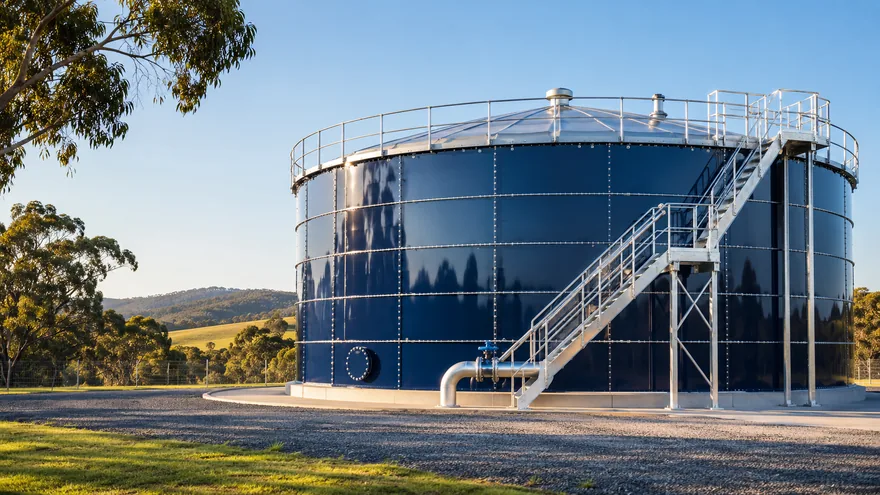
Explore the ways GFS tanks may fit different Australian storage duties. Each application needs its own design and compatibility review.
Potable, raw and treated water
Explore solution
Effluent and treatment processes
Explore solution
Dedicated fire protection reserves
Explore solution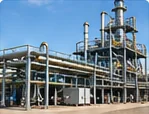
Process and utility storage
Explore solution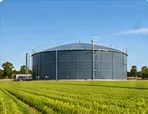
Irrigation and on-farm storage
Explore solution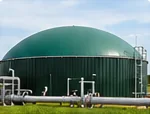
Digestate and associated storage
Explore solution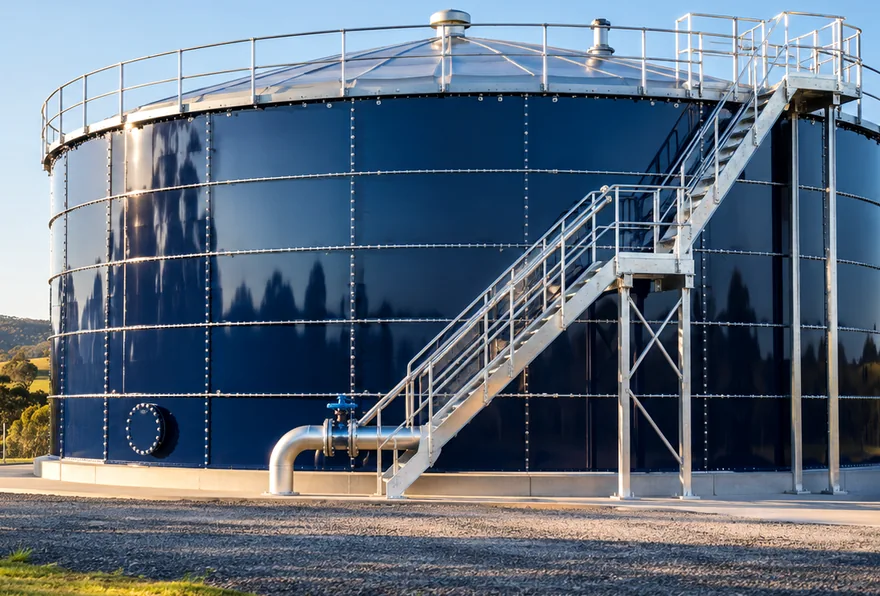
Glass-fused-to-steel combines structural steel panels with a glass-based coating fused at the manufacturing stage. The finished panels are assembled into modular bolted tanks on site.
For the right duty, this can provide a highly corrosion-resistant storage surface with flexible tank geometry and practical site assembly.
Whether you have full drawings or an early storage requirement, start with the essentials.
Tell us the application, location, required volume and the fluid you need to store.
Consider coating compatibility, structural criteria, roof, connections and installation constraints.
Use the clearer scope to support supplier discussions and an informed project quotation.
No two tank projects have the same site, water quality, regulatory needs or budget. These are the details worth considering early.
Potable water, effluent and industrial liquids can call for different coatings, seals and validation.
Storage targets, operating levels, site footprint and allowances affect the proposed dimensions.
Wind, ground conditions, access and installation methods must fit your specific Australian site.
Specifications, material evidence and approvals should be reviewed for the intended duty.
Explore the practical questions buyers, engineers and project managers ask before they choose a tank.
Browse all FAQsGFS stands for glass-fused-to-steel. The tank panels use a glass-based enamel that is fused to steel under factory-controlled heat. The completed panels are generally bolted together on site.
GFS means glass-fused-to-steel; GLS often means glass-lined steel. These terms are sometimes used for similar systems, but specifications and coating grades still need to be checked.
GFS coatings can offer high corrosion resistance for suitable duties. Performance depends on the complete system, including coating selection, seals, panel joints, installation quality and water chemistry.
They can be considered for drinking water projects when the actual product and all water-contact components have suitable evidence and satisfy the relevant approvals, including applicable Australian material requirements.
The cost depends on usable volume, diameter and height, site access, foundation, roof, fittings, the stored liquid and supply/installation scope. A project brief allows a more meaningful quotation.
Clear, practical guides on GFS tank technology, comparisons and project budgeting.
Understand how glass-fused-to-steel (GFS) tanks are made, where they are used, their benefits and the questions to ask before specifying one.
6 min read Read guideWhat determines glass-fused-to-steel tank pricing in Australia? Explore capacity, foundations, installation, coatings, access and practical quote preparation.
5 min read Read guideCompare glass-fused-to-steel tanks and galvanised steel water tanks for Australian projects, including coatings, installation, maintenance and use cases.
6 min read Read guideTell us what you need to store, where the tank will be located and your approximate capacity. We’ll use those details to understand your enquiry.
Fields marked * are required.